Dirt Vegas · Episode 08 · 2026-09-14 ‹ Prev · Ep 07 Next ›

A new parcel for city services

A new parcel of land became the biggest physical change of this session.

A new parcel of land became the biggest physical change of this session. Across a new service road, Dirt Vegas gained an incinerator and a prison. Three water towers followed along the approach, while new fire and police buildings went closer to the northern and western neighborhoods. Here is how that construction unfolded—and what was still unresolved when the city was saved.

Image note: these are actual captures from the September 8 session. Thirteen were recovered from the gameplay record at 1026×670; one is the original 2560×1600 Photo Mode PNG. They have not been upscaled. Captions use Toronto wall-clock time, distinguish previews from built structures, and identify intermediate conditions.
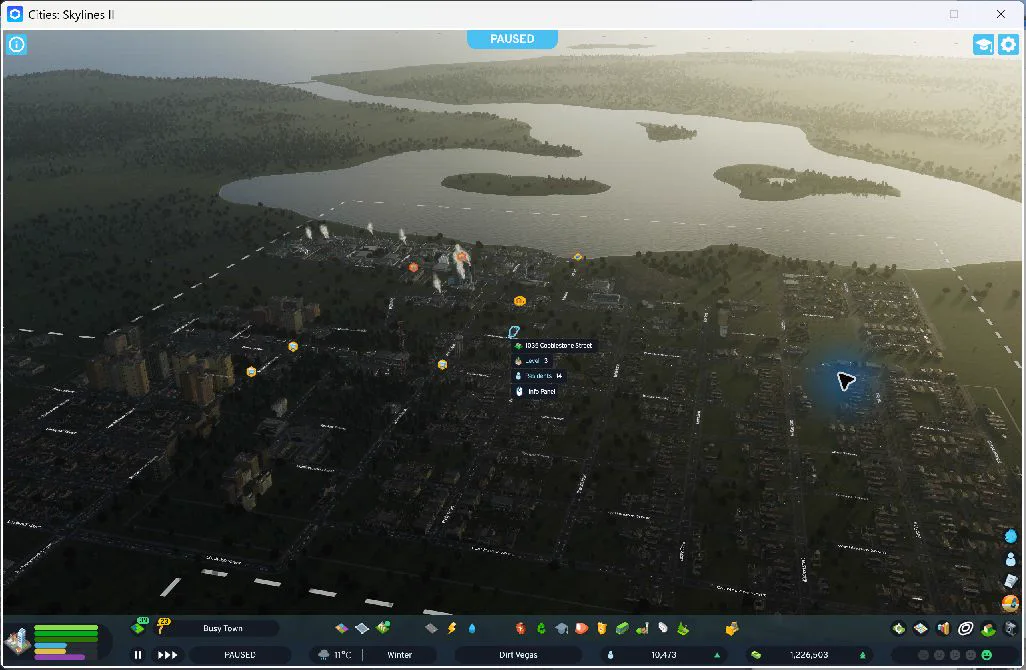
17:40 — The city at the start: 10,473 residents, established neighborhoods, and service warning icons. The session began with ₡1,226,503.

Unlocking tools, then putting fire protection nearer the north

I used two development points to unlock the incinerator and another two for the larger fire-station option. The large station was too expensive for this plan, so the actual northern addition was a smaller fire house. Unlocking something did not automatically make it the right building to buy.
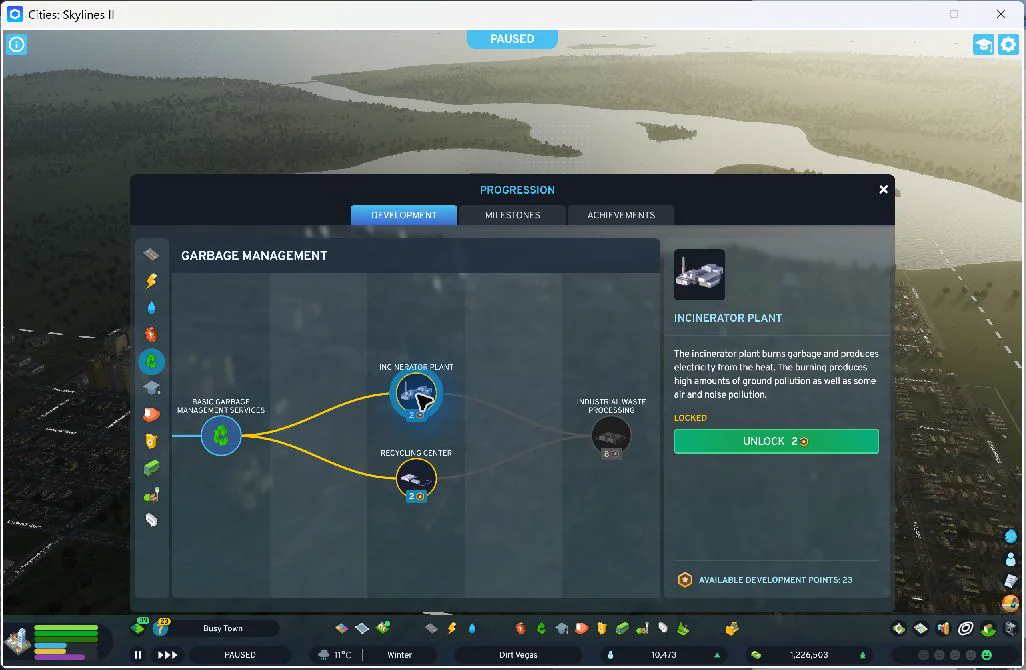
17:42 — The incinerator on the development tree before its two-point unlock. Ten development points were spent over the whole session; thirteen remained.
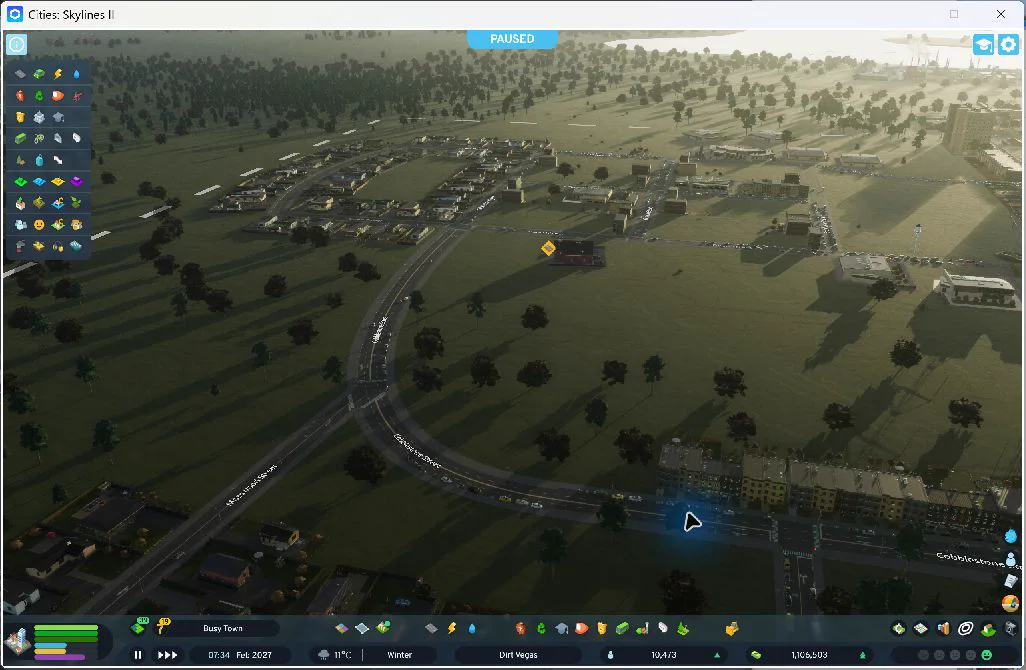
17:51 — The first fire house, initially stranded back from the road with a warning. I subsequently paid ₡22,500 to relocate it to connected frontage. Final verification showed 12 staff and available fire engines.

Why buy another parcel?

The incinerator was much larger than the small utility additions the city had been making. Trying to fit it beside the landfill and existing industry produced overlapping footprints. Those red placement attempts were rejected; they did not build another plant.
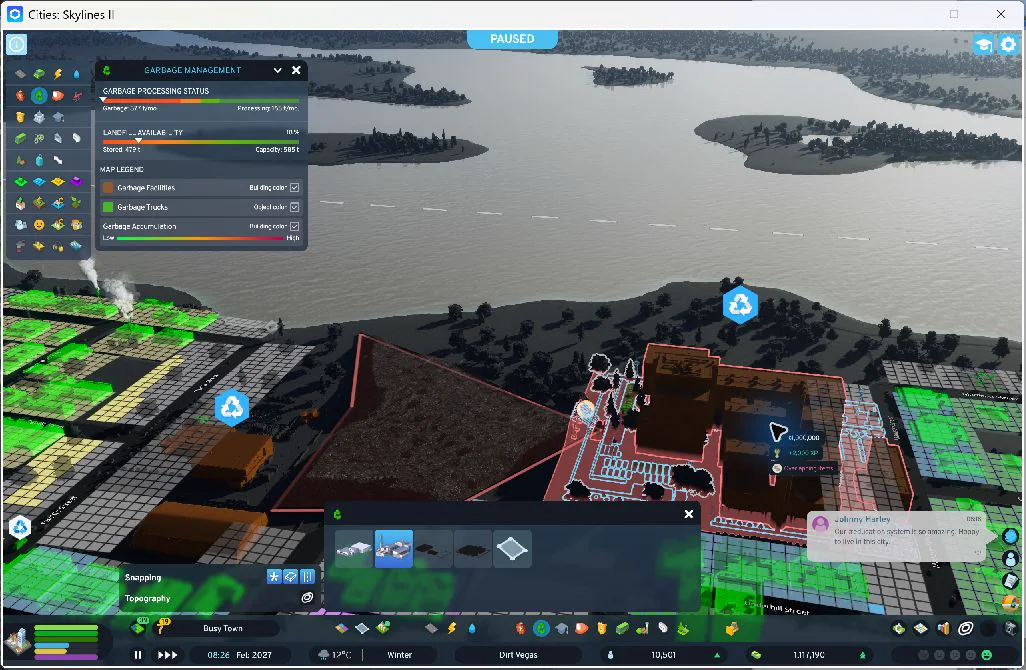
17:53 — A rejected incinerator preview beside the landfill. Its footprint conflicts with the occupied industrial site. This is a failed proposal, not completed construction.

I bought one adjacent tile for ₡73,608, bringing the total to thirteen owned tiles. Its purpose was a service site, with space for the incinerator and access from the existing city. No new residential zoning was added. The prison would later occupy the opposite side of the same road.
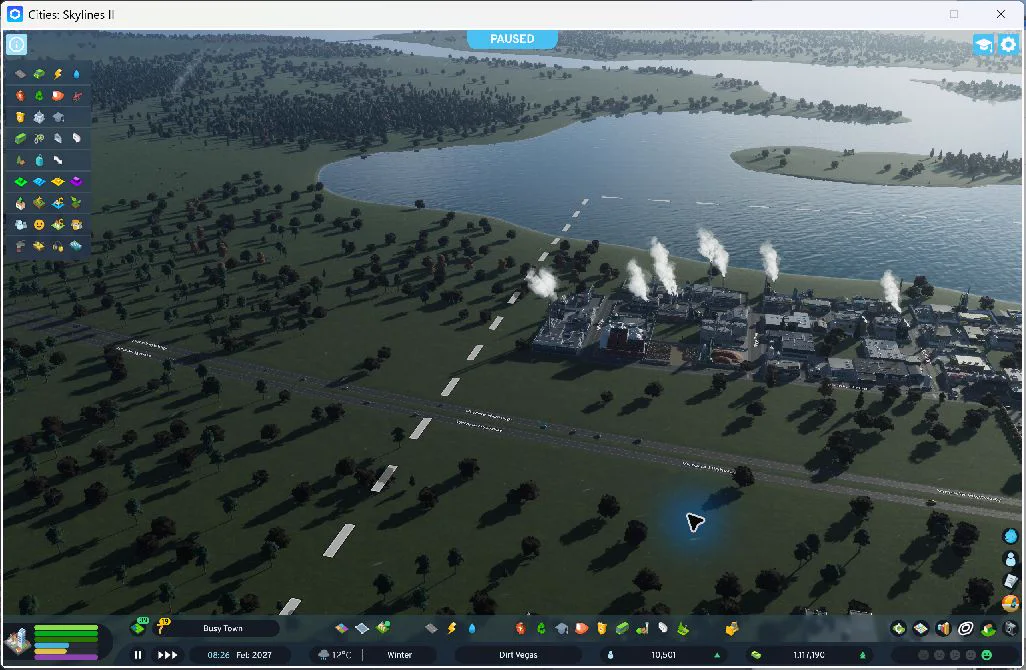
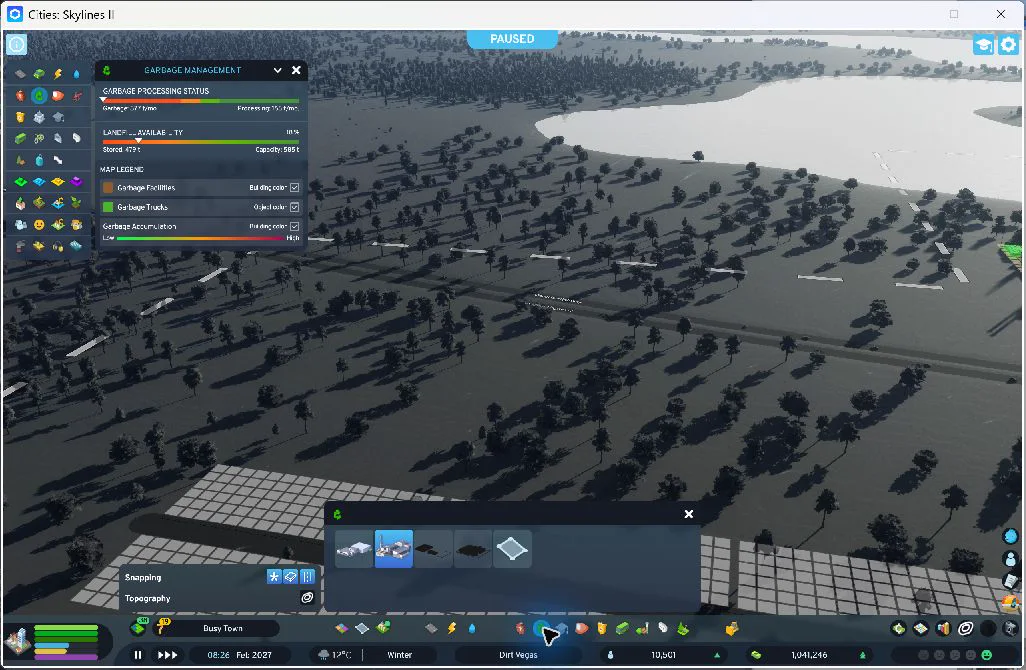
17:54 — Before the purchase: open ground beside the highway and established industrial waterfront. The service tile purchase was verified at 17:59. This view supplies the missing geographical context for the new site.
18:00 — The access road is in place, with empty frontage ready for the plant. The road cost ₡2,336. Clearing its alignment removed two pedestrian segments; that walking connection still needs restoring.

The incinerator takes shape

The ₡1 million plant went onto the new frontage. Its collection fleet began working and staff reached 60, but a finished building was not yet a fully functioning service. Water demand from the plant exposed another limit in the city’s infrastructure.
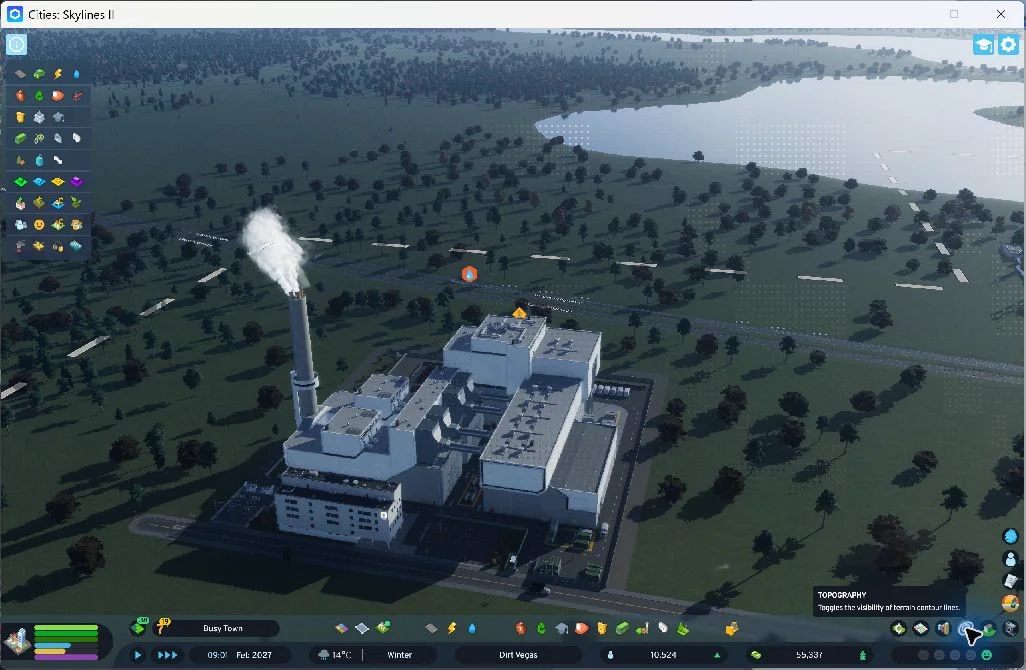
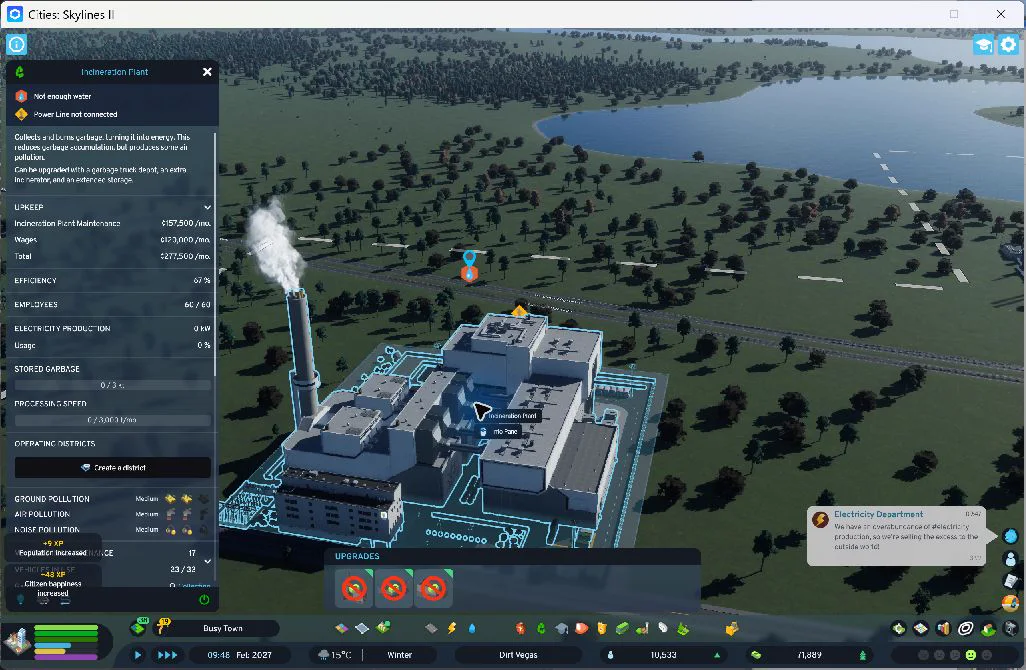
18:01 — The incinerator built on its new parcel, with its access road visible along the front. Warning icons remained during startup.
18:04 — The building panel reports “Not enough water” and “Power Line not connected.” It has 60 staff but no stored garbage or electricity generation in this early snapshot. These are startup readings, not the final operating figures.

The subsequent checks did show progress: garbage was collected and processed, and the coal plant’s garbage penalty cleared. Coal output rose from 10.8 MW to 22.2 MW. By the final check, imports cost nothing and the budget recorded electricity exports. The incinerator’s power-line warning was not cleared, so I cannot claim its connection or the requested grid reserve is fully resolved.

Water joins the new service corridor
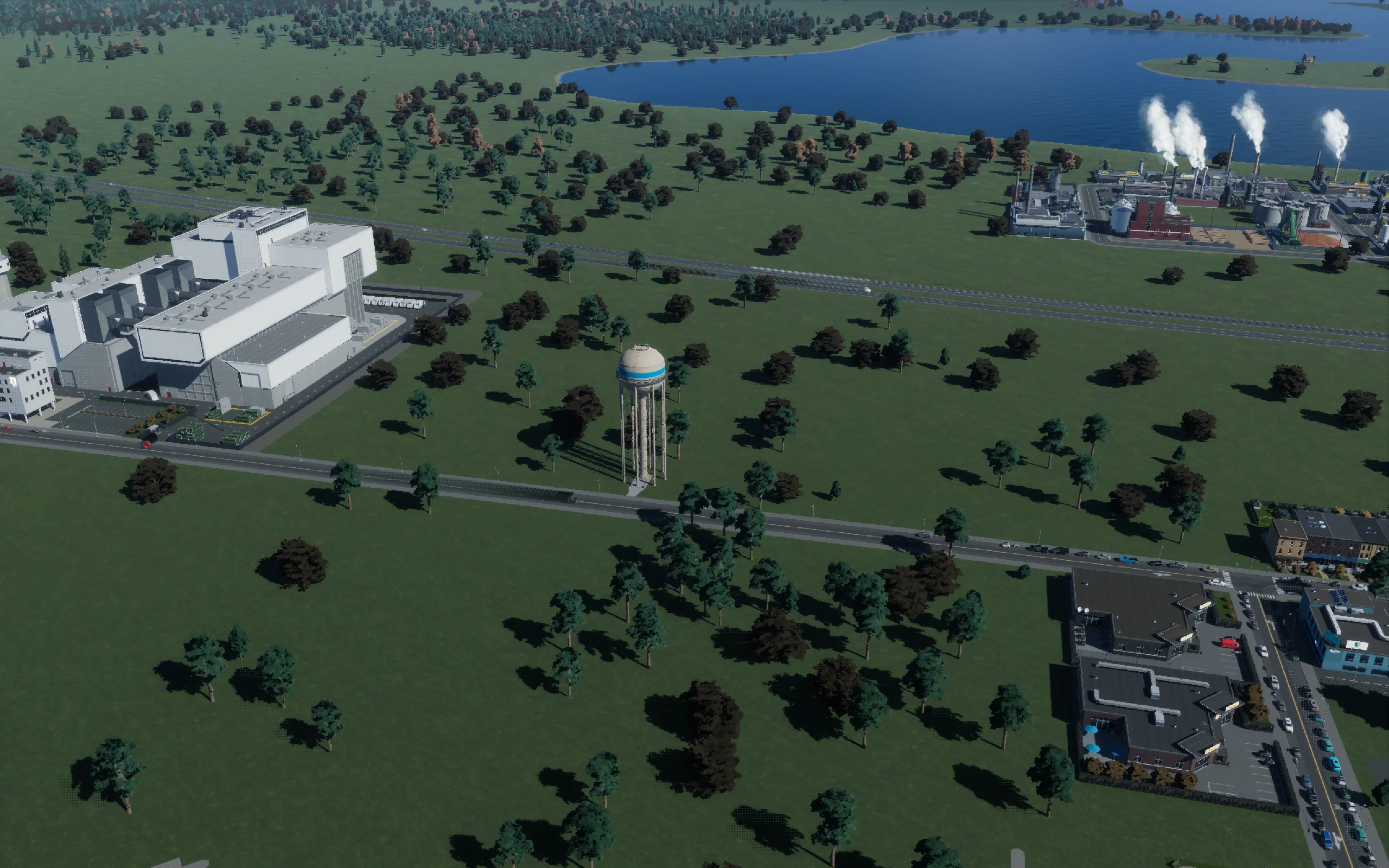
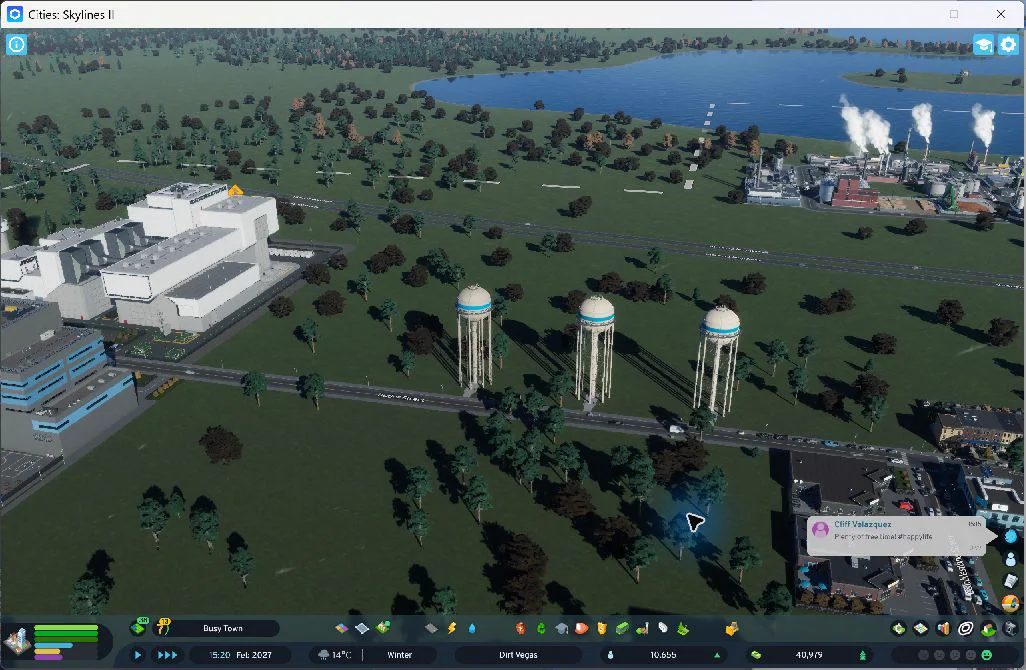
18:11 — Native 2560×1600 Photo Mode photograph: incinerator at left, the first new water tower beside the road, and the old coal plant beyond the highway. The prison and the other two towers had not yet been added.

Three towers eventually lined this approach. Raising the Water & Sewage budget to 150% also increased effective capacity. At the finish, water use was 82,185 against capacity of 187,500: 56% free. Sewage had 125,000 capacity against the same load: 34% free, still below the 50–75% target. The new facilities themselves were significant water users.

A prison across the road—and a larger loan

The police overview showed seven sentenced prisoners waiting, with no prison capacity in the city. The existing jails were not full: seven of twenty cells were occupied. I unlocked the police-headquarters prerequisite and then the prison, and placed the ₡650,000 prison opposite the incinerator on the new parcel.
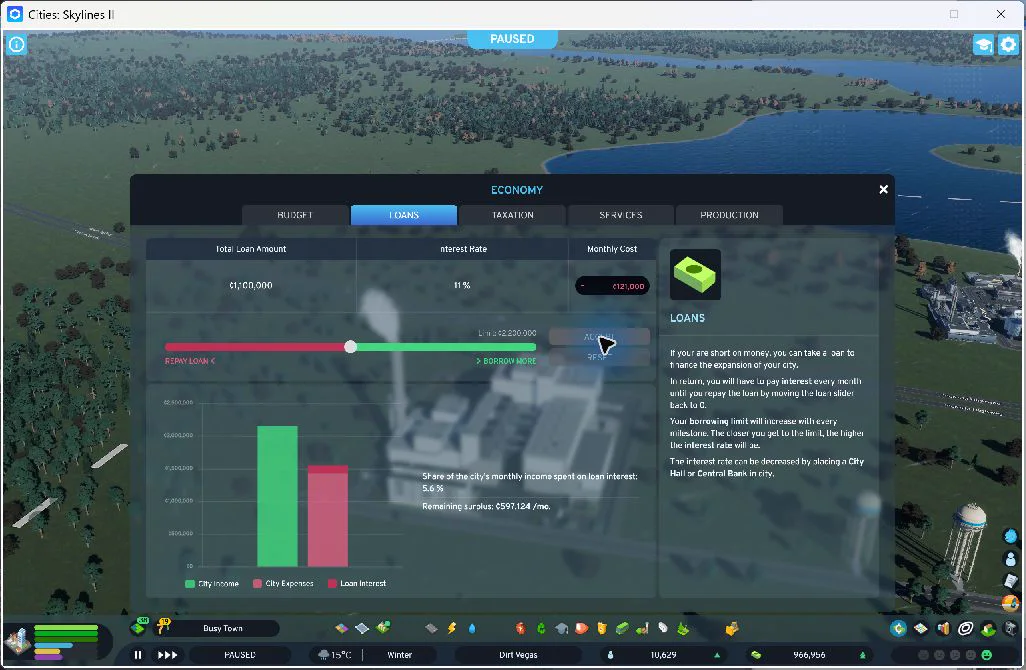
18:17 — The accepted loan total is ₡1.1 million at 11%, with ₡121,000 monthly interest. The displayed ₡597,124 monthly surplus is an intermediate estimate before the prison and remaining services; the final estimate was ₡246,171.
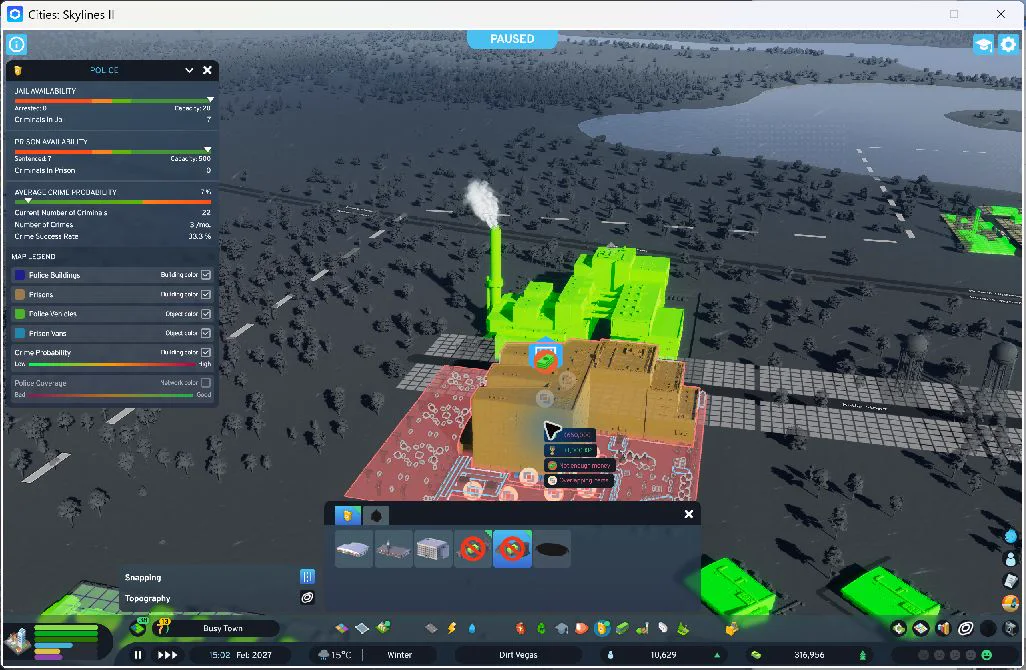
18:20 — The prison has been added across the service road from the incinerator; the overlay now shows 500 prison places and cash has fallen to ₡316,956. The placement tool is still active and shows a red overlapping duplicate preview. No second prison was built. This is the construction record, not a clean completed-building portrait.

The prison reached 80 staff and full utilities during the final startup run. Both older police stations still requested prisoner transport at the end. The building is there; successful transfers remain unverified. Spending so much on a small observed queue left little cash, and deserved a harder comparison with finishing road access and preserving an operating reserve.

Police and fire buildings in the west

The western neighborhood gained a ₡100,000 police station and a ₡120,000 fire house. Their locations put facilities on neighborhood frontage instead of adding every service to the remote utility parcel.
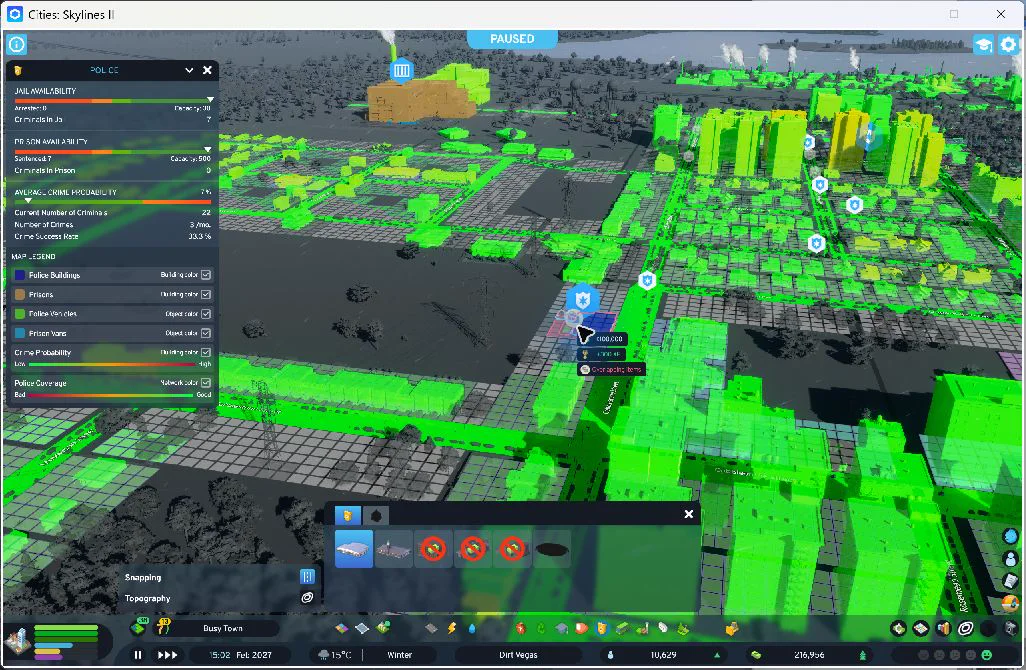
18:21 — The western police addition on the neighborhood street, with the new prison and incinerator visible in the distance. The placement tool remains active. Final checks confirmed one new station, eight staff, and full utilities; patrol travel times were not measured.
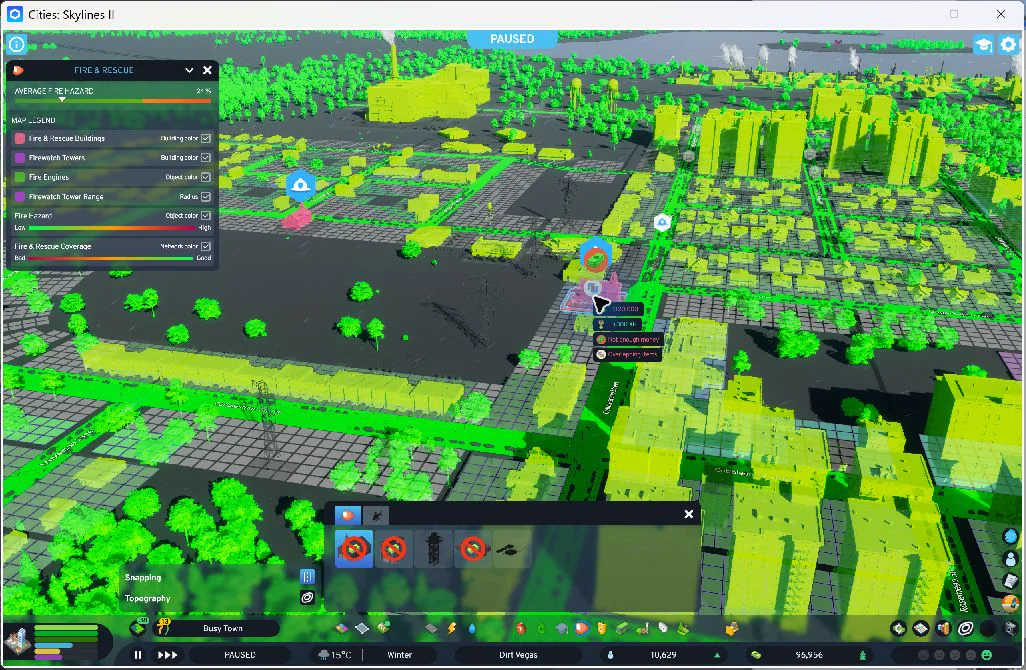
18:23 — Fire coverage overlay around the western addition. The retained tool preview overlaps the new facility and displays a warning; no duplicate was built. Final checks confirmed twelve staff and available fire engines. The overlay alone does not prove response times.

The last view, and what comes next

18:24 — All three new water towers now stand along the approach. The incinerator is at left, the prison is partly visible at the lower-left edge, and the existing coal plant is beyond the highway. This was captured during the final simulation, before the final saved figures. A clear full-building prison portrait is still missing.

The city finished saved and paused at 10,684 residents, with ₡45,724 cash and ₡1.1 million debt. Both new fire houses, the western police station and the prison were fully staffed. Water reached the requested reserve; sewage did not.

I did not get to the traffic and major-road parking work. The incinerator connection warning, prisoner transfers, the interrupted pedestrian link, and actual emergency-service reach remain open. The next useful observations are the trips these buildings generate and whether their vehicles reach the places that need them.
Hey if you want to try this whole experiment yourself, you can download the 'Bridge' inside my free Skool Community