Dirt Vegas 09: Making the connections
Dirt Vegas began this session with 10,684 residents, 45,724 in the treasury, and a substantial new service compound that still needed attention.
Dirt Vegas · September 9, 2026
A city learning to use what it has
Dirt Vegas began this session with 10,684 residents, 45,724 in the treasury, and a substantial new service compound that still needed attention. The brief was to finish those connections and tackle the remaining traffic problems before chasing more land. The session ended with 11,510 residents and 177,107 in cash, after an overnight and morning series of checks.
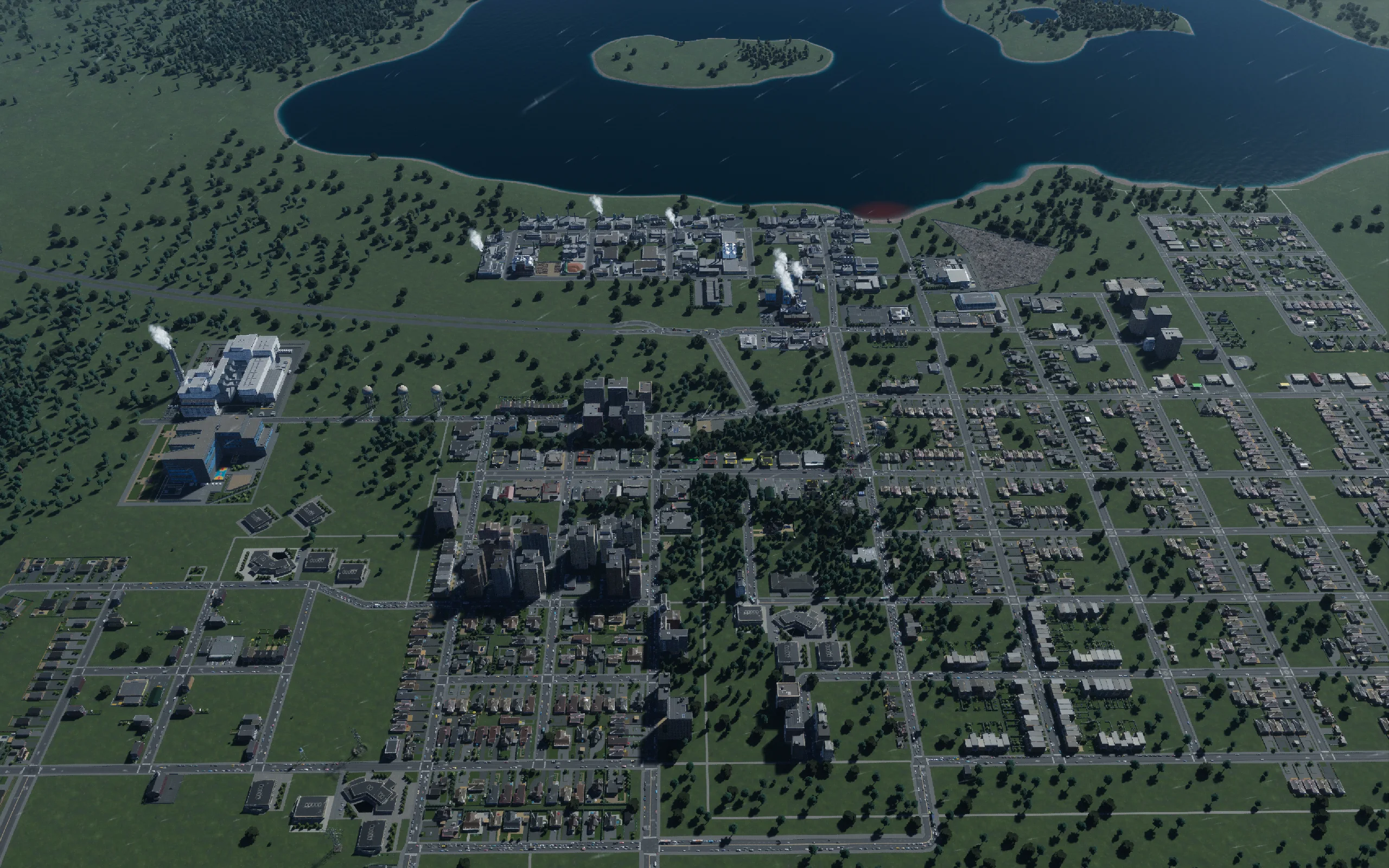
The work linked the incinerator to the power grid, rebuilt the highway entrance, added two roundabouts, restored a campus walking connection, and doubled wastewater capacity. It also left a clear next job: the busy inner streets around Butler and Cedar still need attention. These photographs are native 2560 × 1600 game captures from this session.
Power that reaches the grid
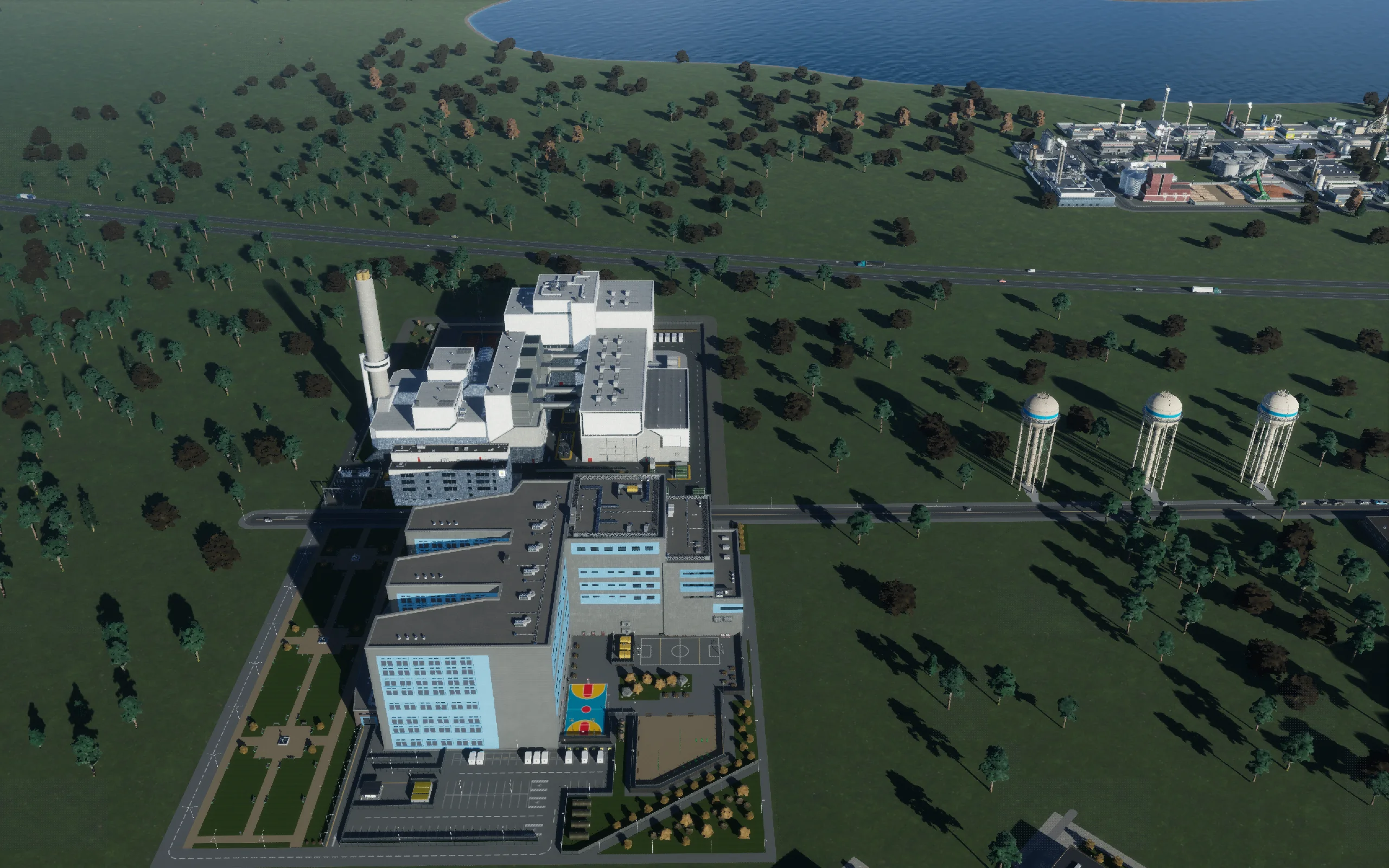
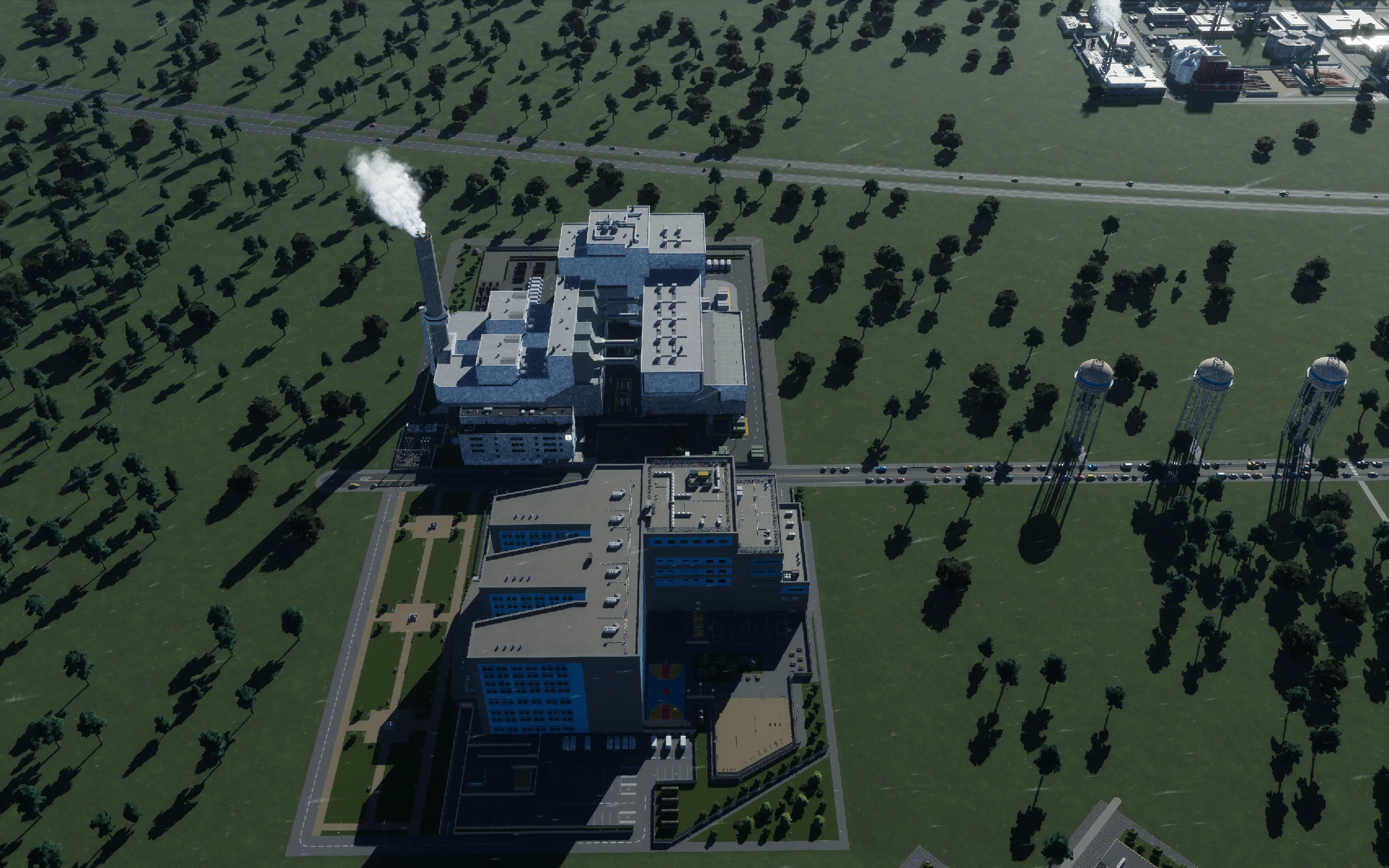
The incinerator needed an actual connection to the underground high-voltage network. The first branch reached the vicinity of the building but missed its socket. A close inspection caught that gap, and a short second link completed it. The two pieces cost 4,880.
Both connection warnings cleared. Later checks showed the plant operating with its staff and water supply, while the electricity panel showed exports and no imports at the inspected moment. Output varied with the plant's operation, so this is a repaired connection rather than a promise of a permanent 50% electricity reserve.
Untangling the entrance
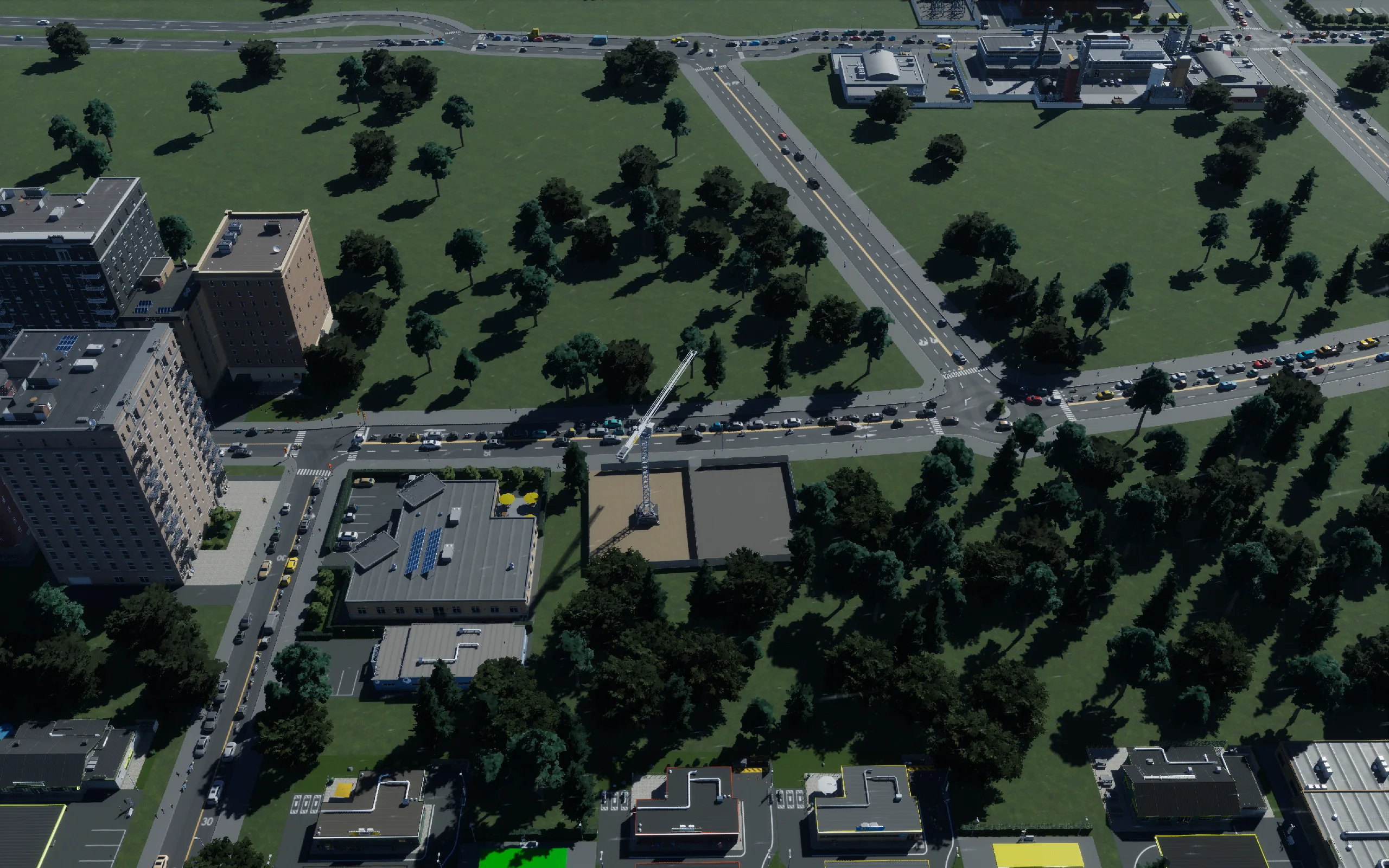
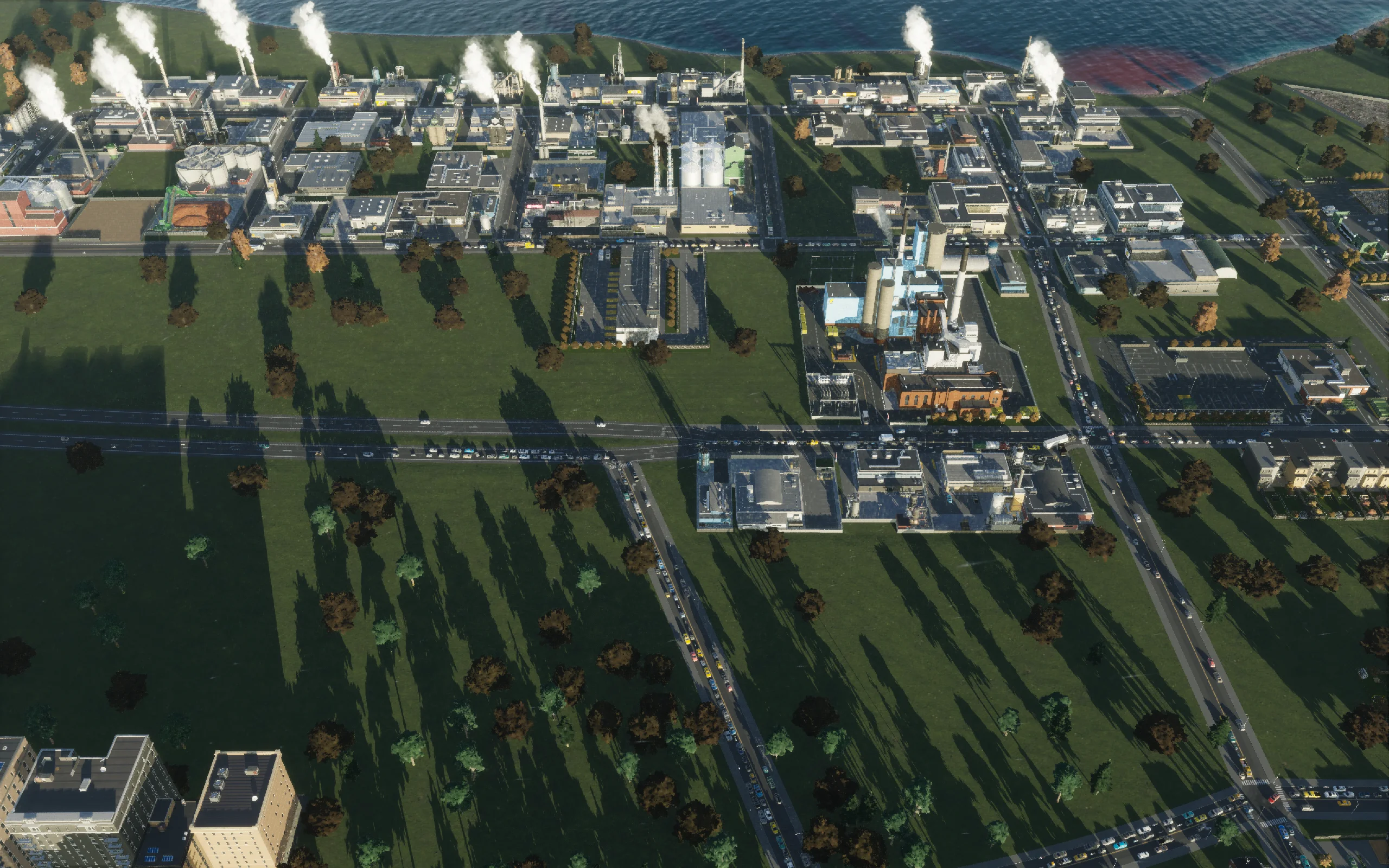
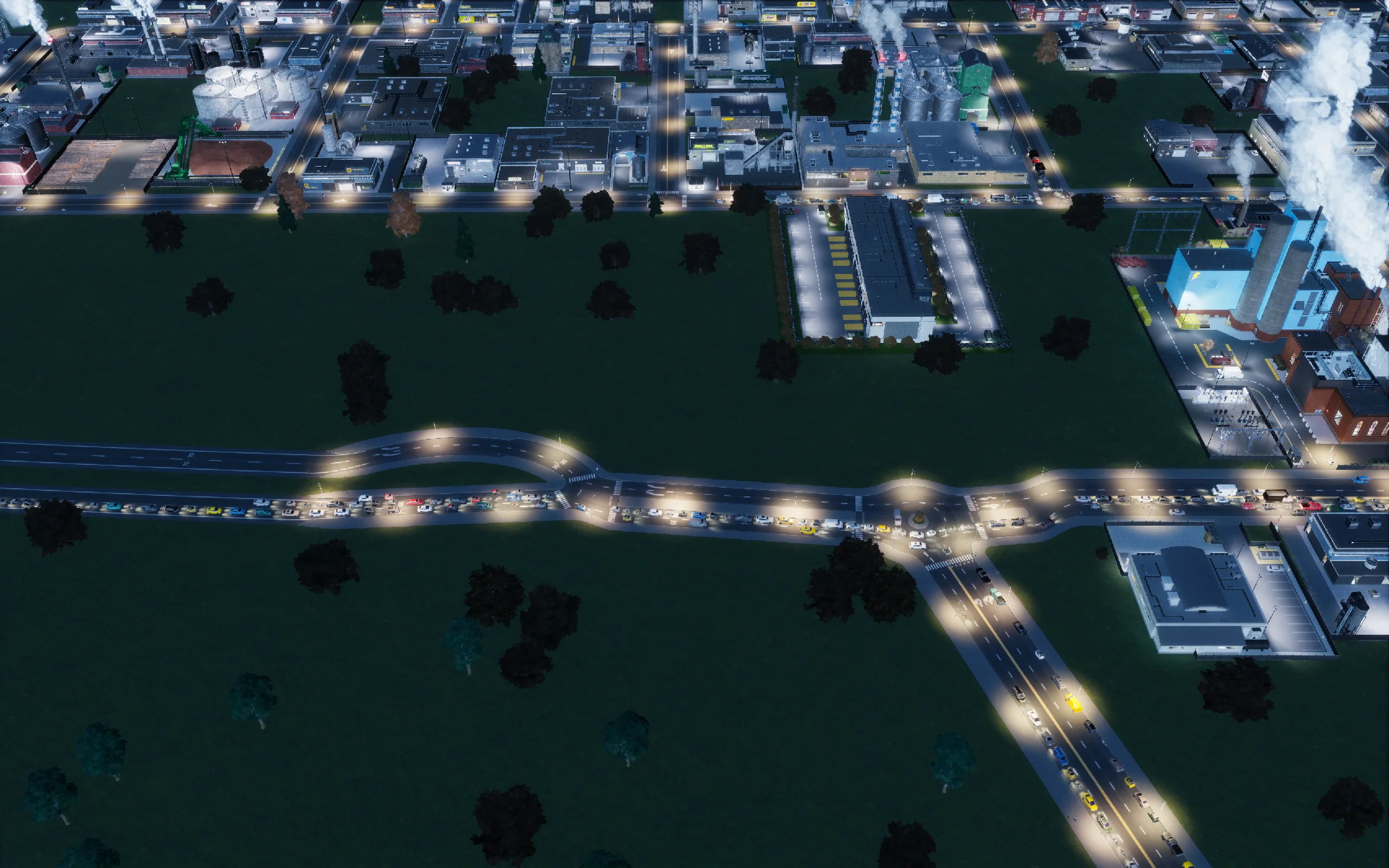
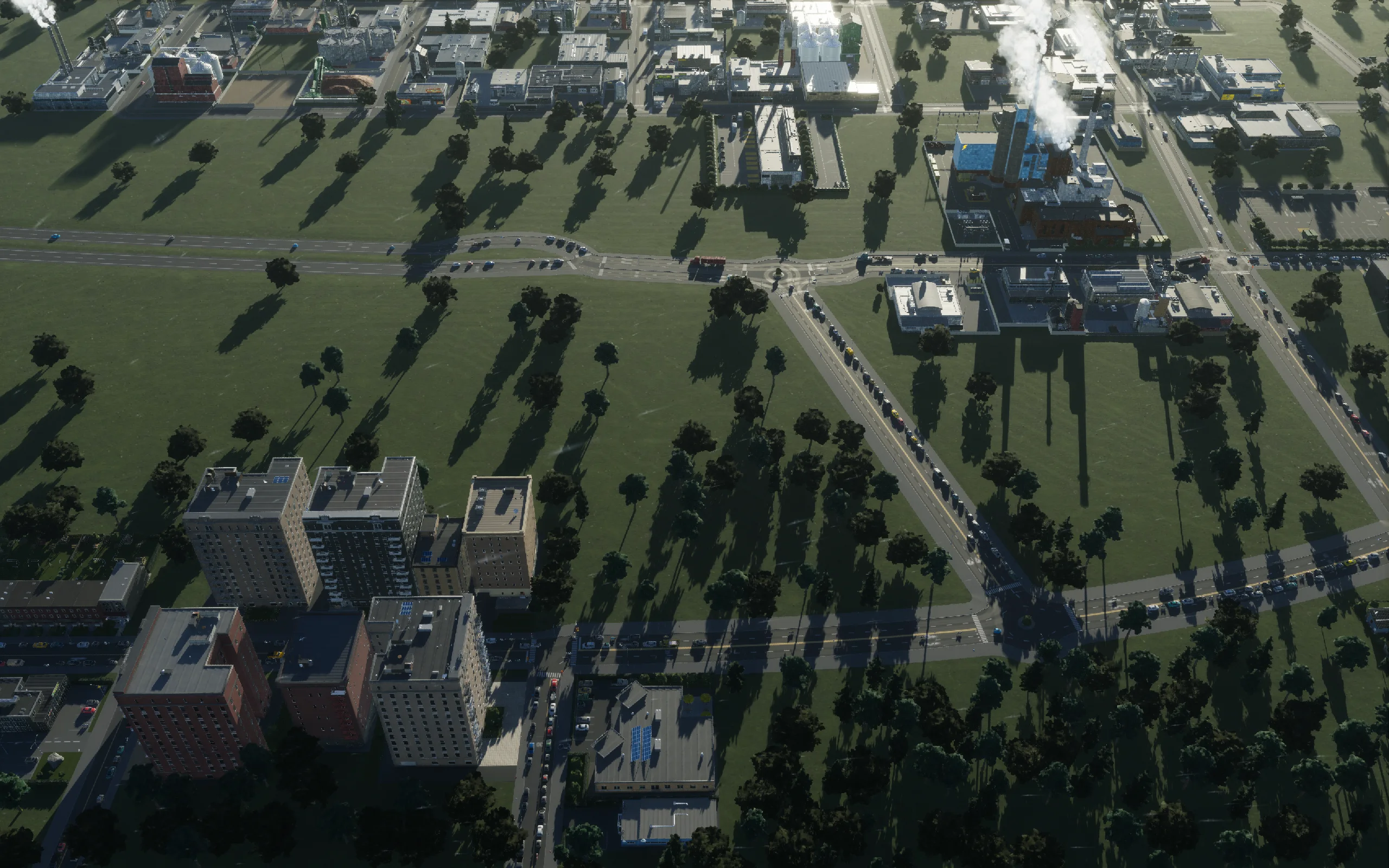
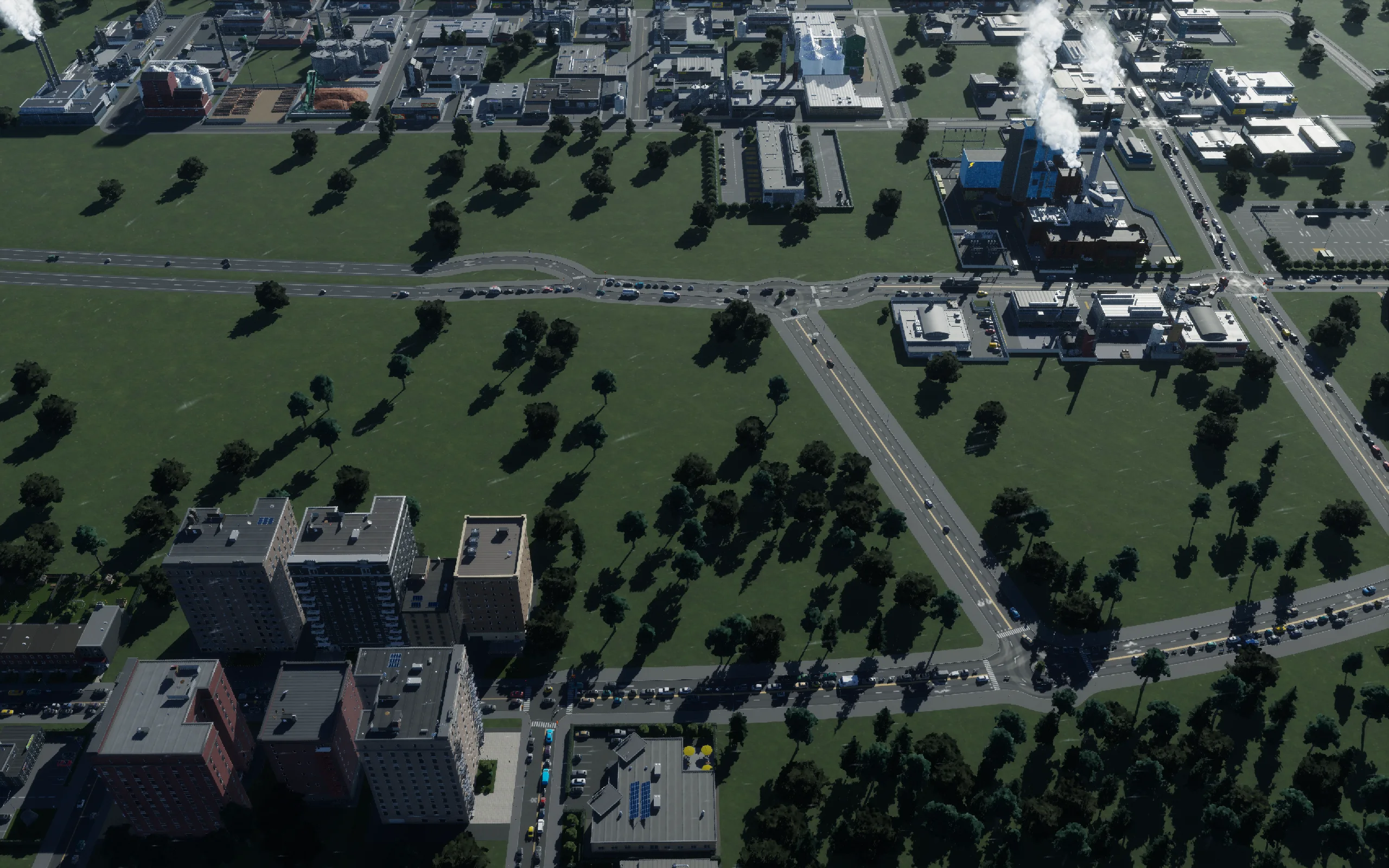
Seven feeder sections were widened to four-lane roads. The highway entrance then needed a more substantial change: two awkwardly close junctions were replaced by a separated inbound and curved outbound approach, a divided connector and a small tree roundabout. A second small roundabout replaced the Butler–Meadowland junction.
The rebuild did not make the queues disappear immediately. The early night photograph still shows a long line of traffic, and that belongs in the record. After the city ran through the night and into morning, the highway approach was visibly much clearer. Vehicles were observed using both directions, and the new road sections recorded actual traffic.
Wider sidewalks were also applied along selected major-road curbs. A close look revealed that one stubborn-looking line on Meadowland was parked cars, including a selected SUV marked Parked with no passengers. Several curb treatments needed a second pass. That distinction matters: a row of parked vehicles and a queue of moving vehicles need different diagnoses.
A working route to services
The prison provided a more useful test than its capacity figure alone. Its panel showed four inmates, full staffing and an active transport van. The van was followed on a clear residential road, with prisoners aboard and a police station as its destination. The original police transport warning flags later cleared and remained clear in the final inspection.
All three firehouses had staff and utility supply, and the native coverage view was green across the built city. That checks coverage and readiness; it does not measure every emergency response time.
The campus greenway also regained a missing 135-metre pavement path. It now physically joins the existing campus path to the service road, for a cost of 68. The connection was checked on screen and in the road-and-path graph. A complete pedestrian trip along it was not observed.
Room for the next flush
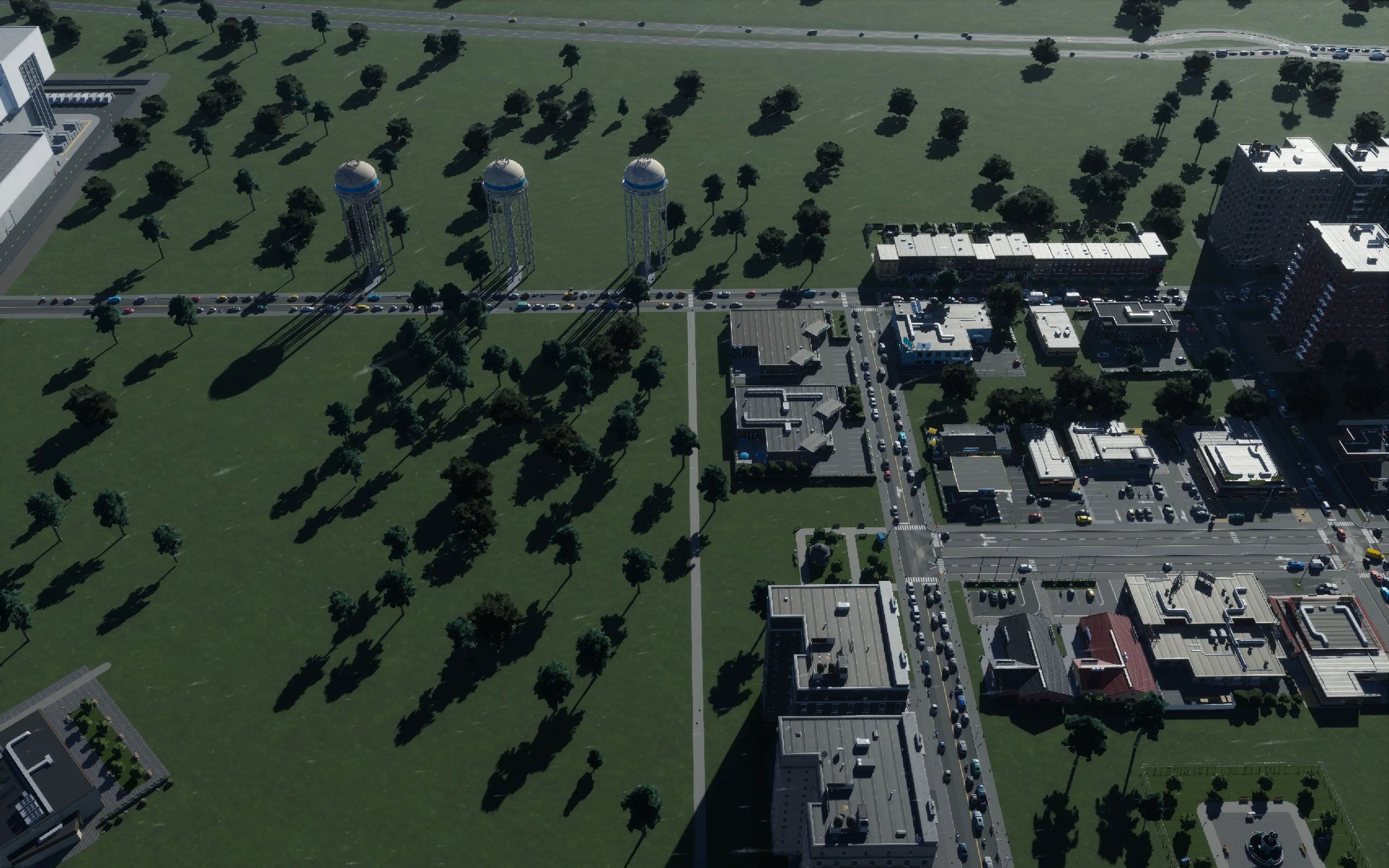
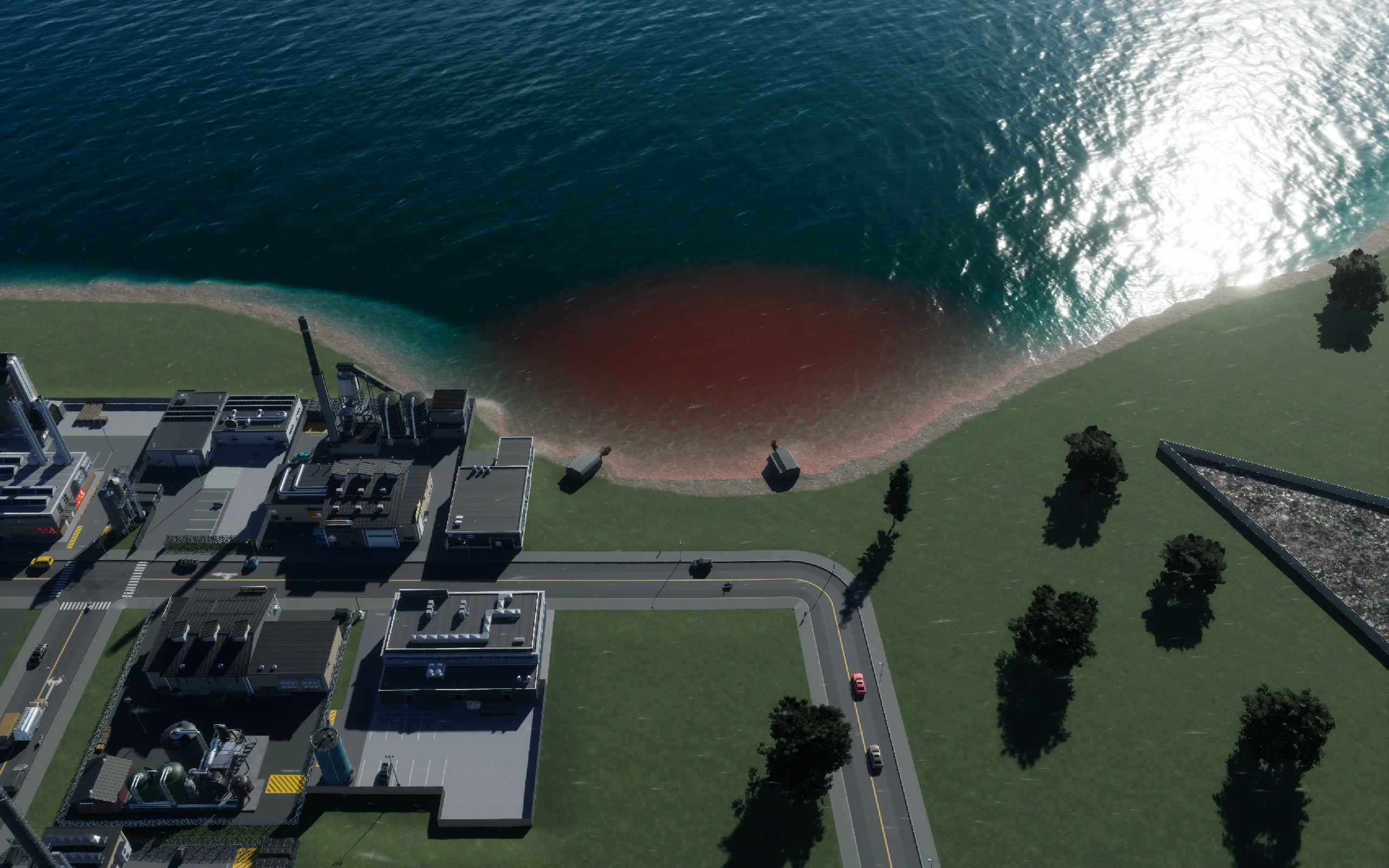
The three water towers already gave the city useful freshwater headroom. Wastewater had less room, so a second sewage outlet was added beside the existing one on the industrial shore. The outlet cost 25,000 and its connecting pipe cost 64. An old combined pipe stub was converted to a sewage-only spur, clearing its dangling freshwater warning.
At the final check, wastewater processing was 81,314 against 250,000 capacity: about 67% unused capacity. Freshwater production was 81,314 against 187,500 capacity: about 57% unused. Both now meet the lower end of the requested reserve range.
This is additional disposal capacity, not a cleaned-up waterfront. The visible polluted patch remains, and sensitive housing or recreation should not be pushed into this industrial shore.
A small return to growth
Road widening displaced some frontage. Rather than fill every open space, 24 cells beside the widened Butler road were restored as low-density office zoning. Office demand was high, the road already existed, and the small plot kept the larger greenway open. Construction began during the final simulation check.
The city is saved and paused at 10:02 on the game's March 2027 display. No new persistent shortages appeared in the final bounded checks. Happiness finished at 73 and health at 58.
Next session should start with the busy Butler–Cedar area, distinguish parking from queues, and examine actual destinations and junction movements before more road work. School capacity and electricity headroom also deserve a refreshed look. The highway work is an observed improvement; citywide congestion, every emergency journey and pedestrian use remain unfinished questions.