Dirt Vegas: A place to live, a place to work
A house is a respectable beginning.
Mayor Choo Choo Sinclair · September 12, 2026
The other half of an address
A house is a respectable beginning. It is less useful if the nearest available job exists only in the mayor’s speech. Dirt Vegas began this session with full housing demand, full office demand, and a treasury healthy enough to tempt a man into announcing something enormous. I bought streets, school places and a little common sense instead.
Growth beside the city we already have
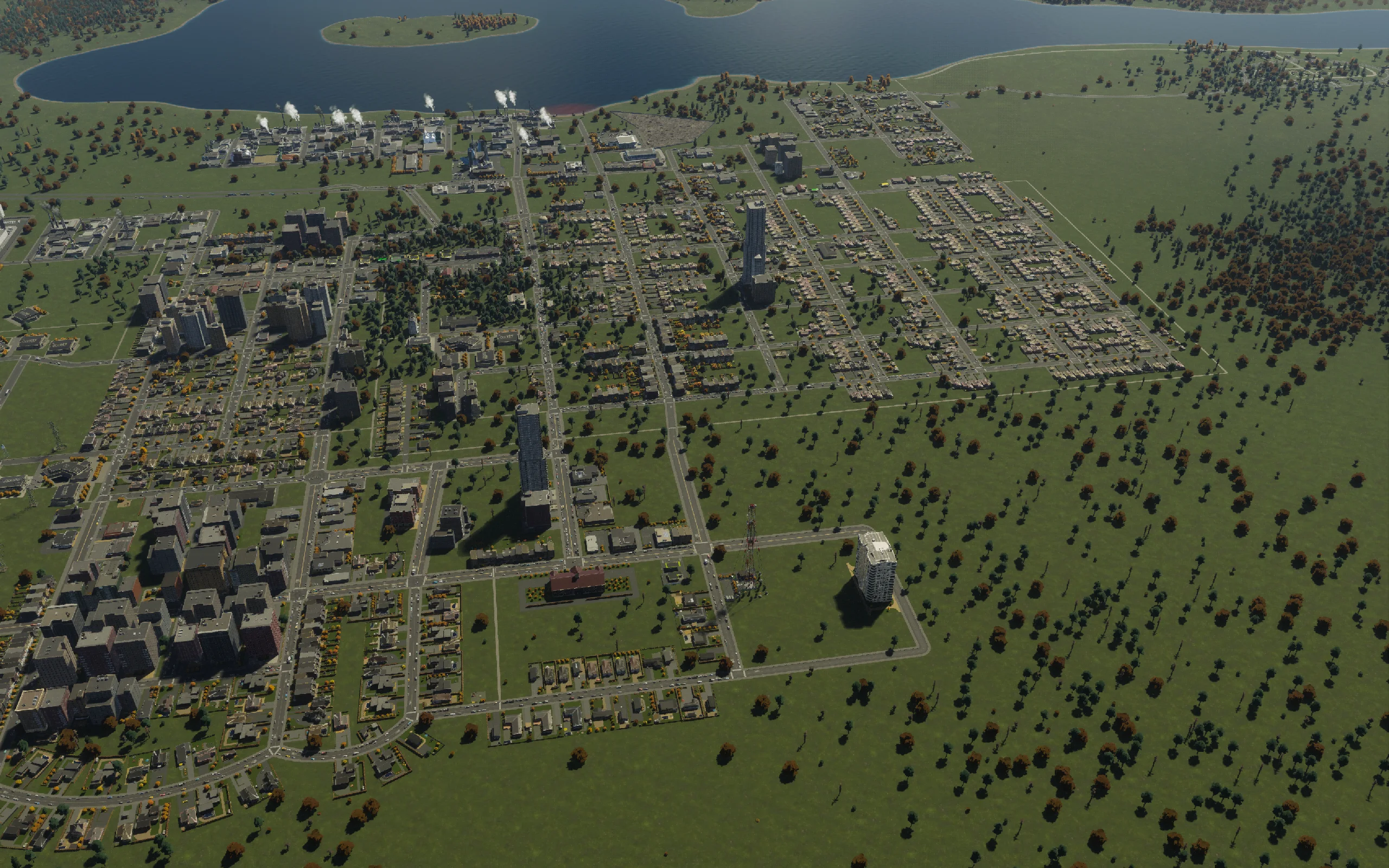
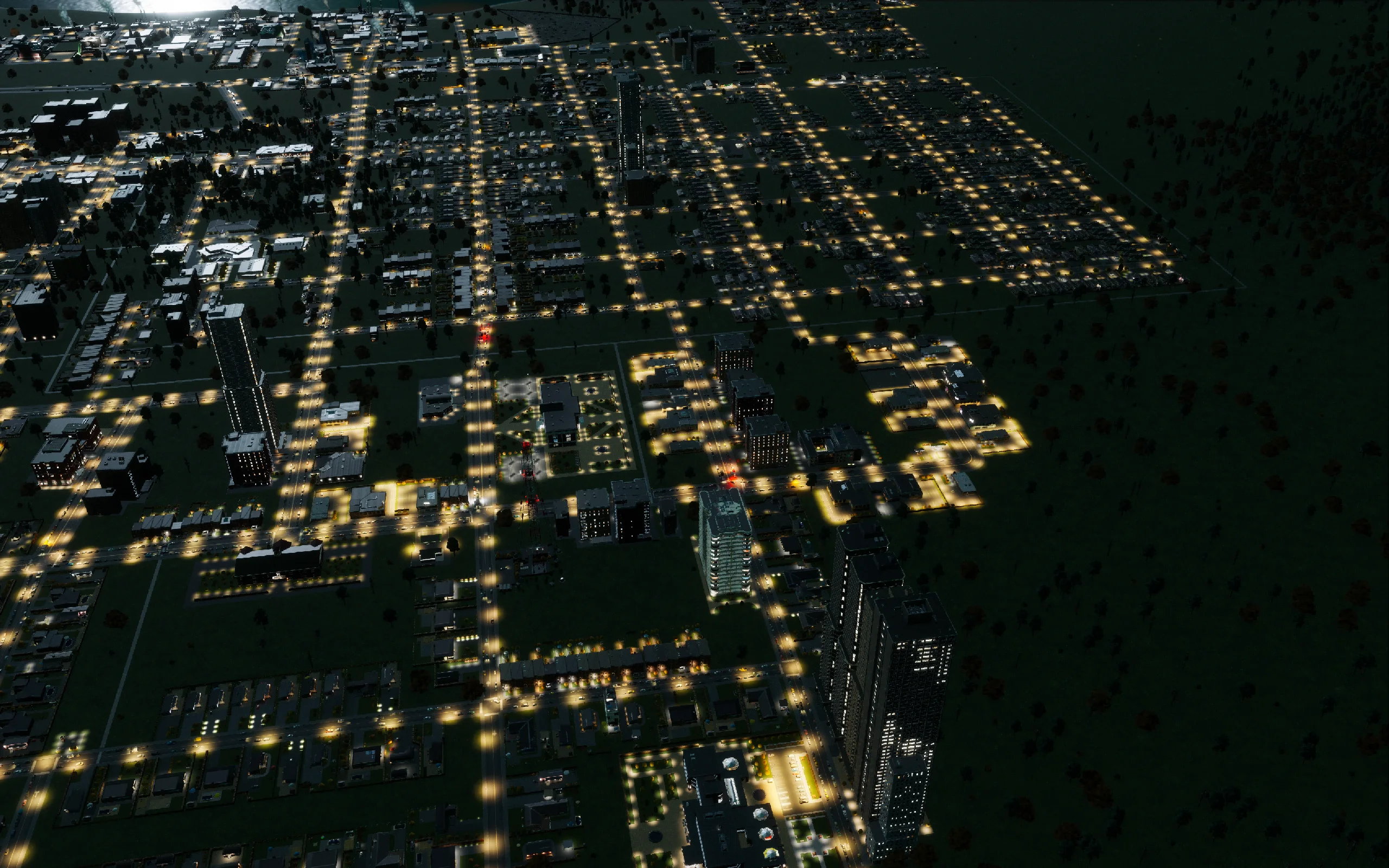
The first neighborhoods went onto land we already owned, beside the western extension. Detached homes took the quieter outer streets; rowhouses and apartments filled the connected blocks nearer the services. A compact high-density section followed once the first apartments had absorbed medium-density demand. In all, we added 1,265 residential zoning cells. Cells are parcels of opportunity, not a promise of that many households.
Three signatures, different jobs
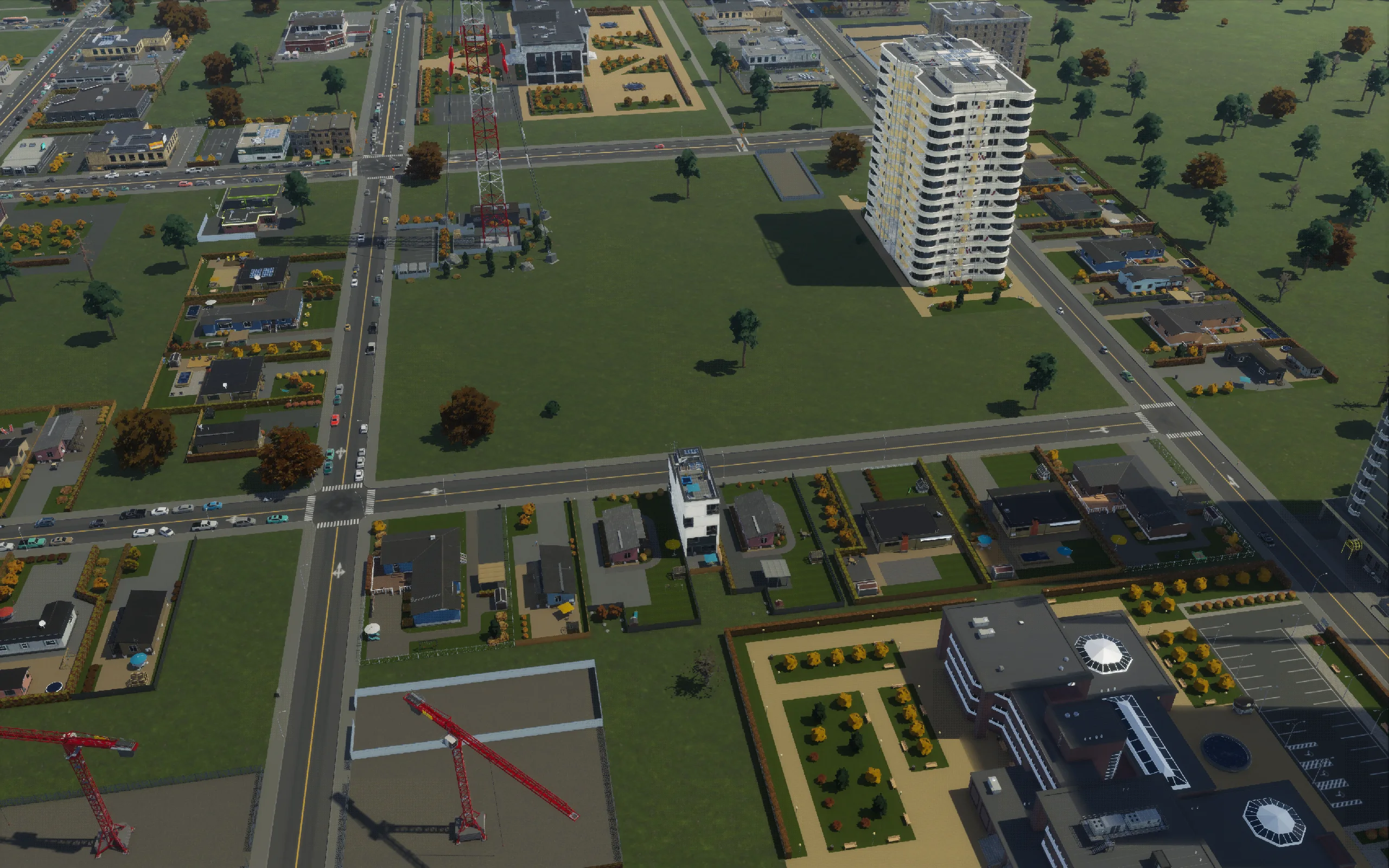
Polaris Suites gives the new neighborhood a recognizable apartment landmark. Baltar Pines is the narrow, distinctive rowhouse building down the street. Both are occupied. At our named-building inspection, Baltar Pines had all eight households filled, while Polaris Suites was still taking in residents. Their listed nearby wellbeing bonuses are useful; the city does not have to admire architecture on an empty stomach. Office growth then unlocked Principiis. After several tight sites failed the placement check, it found a clear avenue-side address at no construction charge and without demolition. Its listed benefit is reduced nearby crime; that benefit is not a measured result of this short session.
A school, a clinic, and a less ceremonial kind of help
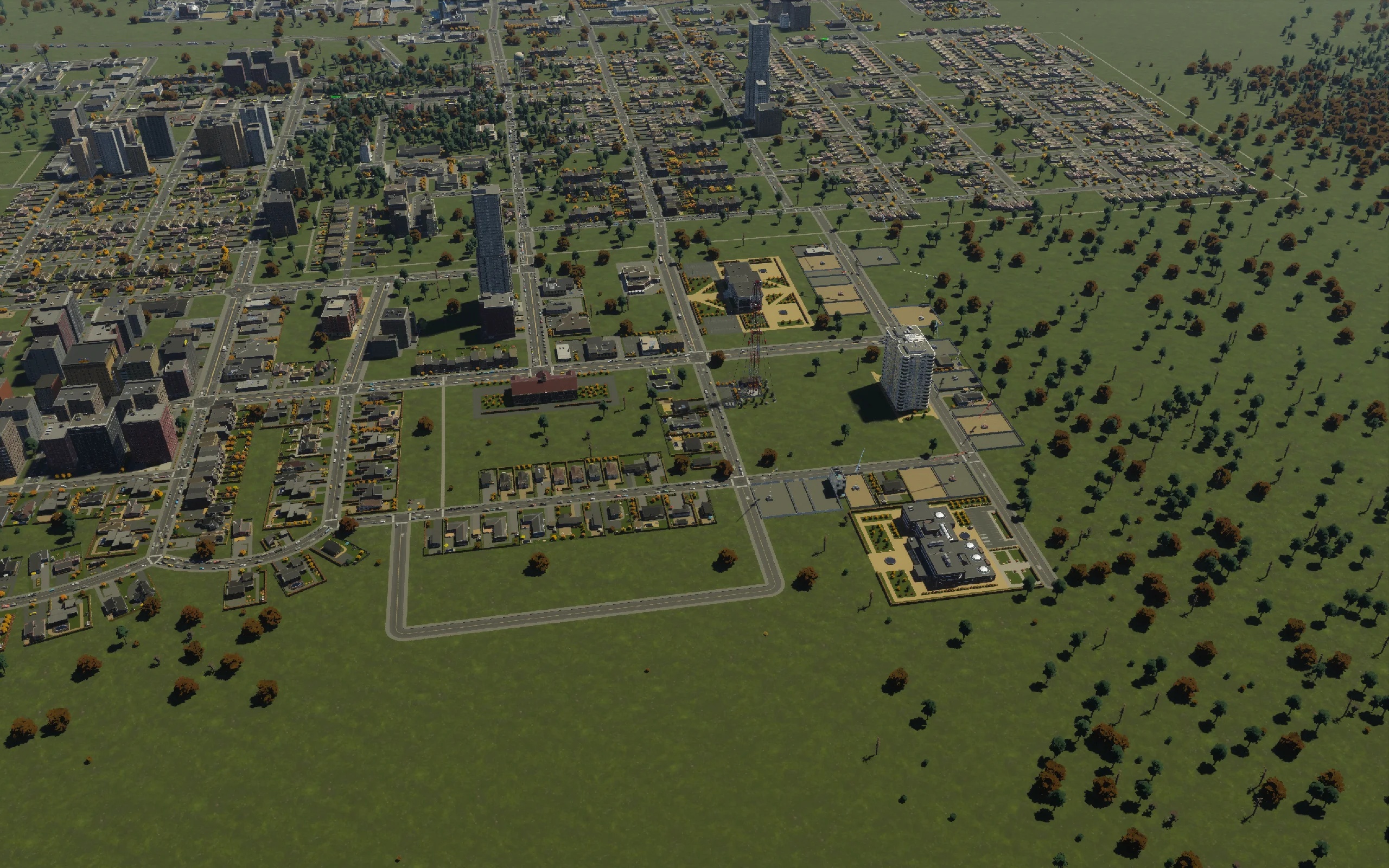
The new high school adds 800 design seats. The clinic adds 100 beds and five ambulances, and the welfare office provides support for lower-income residents. We also built a 275-metre walking shortcut behind the school to the existing promenade. The three services were staffed and supplied during our checks. These observations establish operation, not a timed test of every emergency journey.
The hospital can wait for its moment
Hospital and Welfare Office unlocks used three development points, leaving eighteen. The hospital itself costs 1.88 million. Our existing clinics had spare beds, so I kept the hospital available for a later stage and spent this session’s money on local reach. There is a distinction between being able to cut a ribbon and having a reason to own the building behind it.
Give the newcomers somewhere to clock in
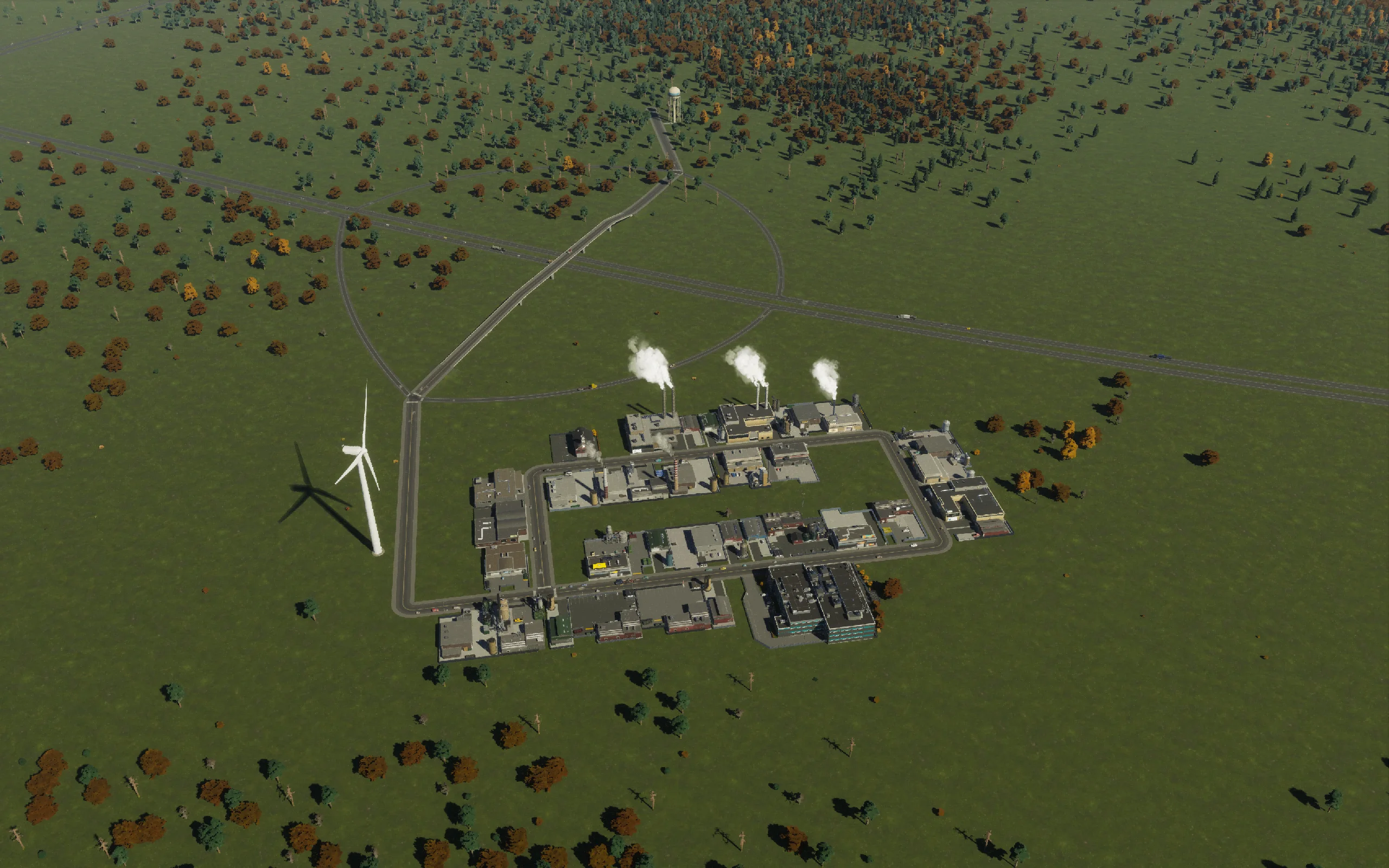
As residents arrived, unemployment rose to 5.81 percent and the city briefly had only fourteen vacant jobs. We answered with manufacturing on existing frontage in the separate freight district, then a compact office extension beside the western neighborhood. Its adjoining tile cost 66,778. Two road connections and the promenade tie it back into the city. Office demand fell to zero, but the afternoon workforce check still showed too few vacancies. A final freight-frontage addition brought manufacturing zoning to 298 cells. Total office zoning was 581 cells, with a small 25-cell commercial parcel for local shops. Hiring will need another look after this wave of arrivals settles.
What the checks can tell us
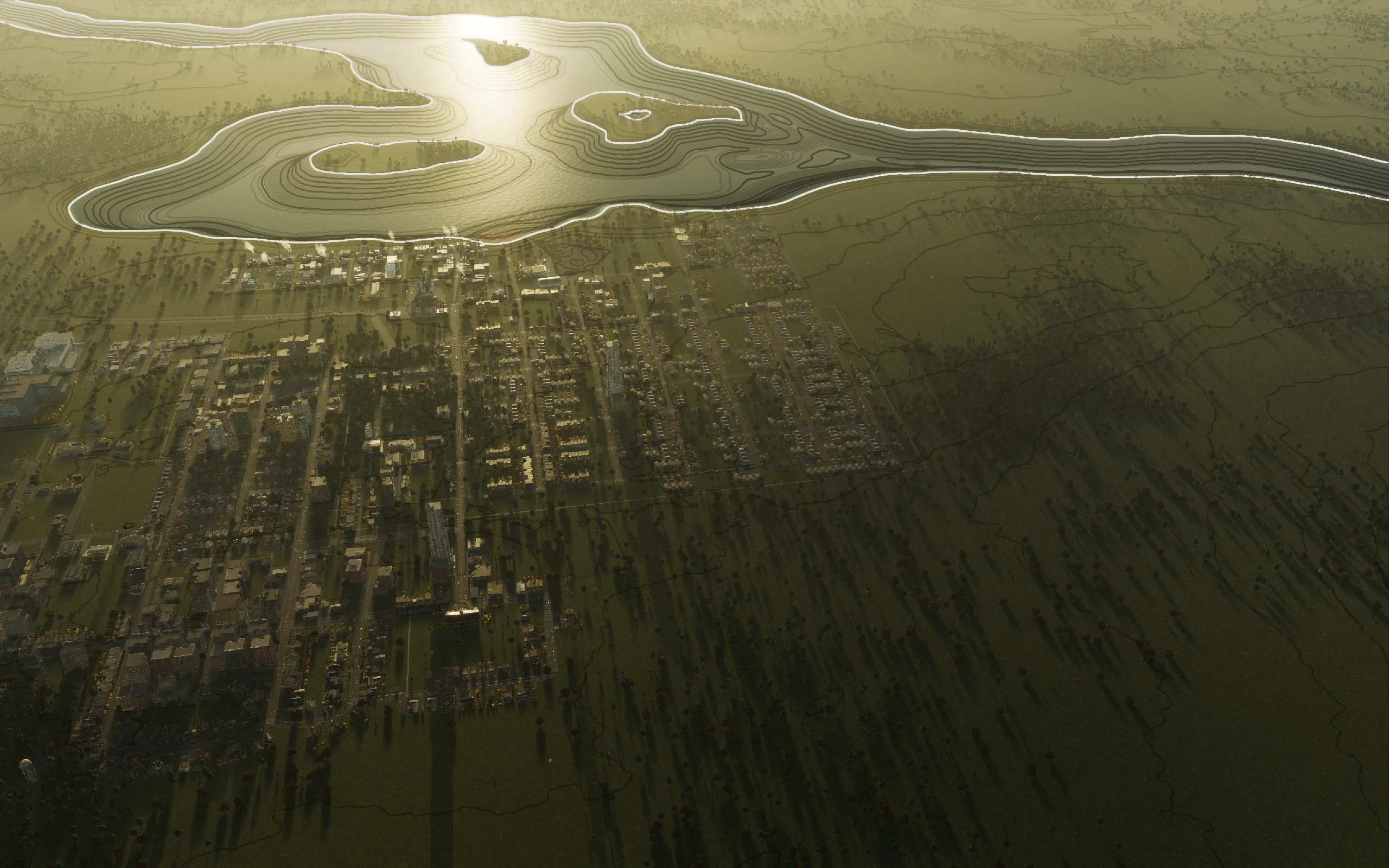
The new junctions came with a real cost beyond the road bill: paused before-and-after maps show three residential buildings removed at their footprints, including one newly developing house. Utility connections also briefly dropped while the networks recalculated. We checked the affected buildings and verified recovery before treating the additions as supplied. Happiness finished one point lower, so more addresses alone have not made the city happier. The final figures below describe the saved city. Campus peak queues, the older Butler Street noise problem, and timed freight collection and emergency response still need their own follow-through. Rivergate’s green buffer remains intact; this session did not turn it into another ordinary suburb extension. The closing workforce check put unemployment at 3.11 percent, with 9,195 workers. The freight district finished with 40 completed factories, compared with 27 at the opening map. Two buildings elsewhere were still developing, and the diagnostics counted ten homeless citizens. The new avenue had a visible queue; the traffic happiness penalty also worsened. Those are next-session work, not figures to hide behind a ribbon.
Where I left Dirt Vegas
| Measure | Start | Saved city |
|---|---|---|
| Population | 20,167 | 23,027 |
| Treasury | 2,734,117 | 2,635,722 |
| Happiness | 74 | 73 |
| Workers | 8,283 | 9,195 |
| Unemployment | 4.14% | 3.11% |
| Persistent utility shortages | 0 | 0 |
May the new streets carry more pay packets than promises, and may a lit window mean somebody has finally found their place. The lake can keep its grand reflections. Tonight I am satisfied to have given a few more people an address—and somewhere to go in the morning.
Choo Choo Sinclair, Mayor of Dirt Vegas